Bloodsports.
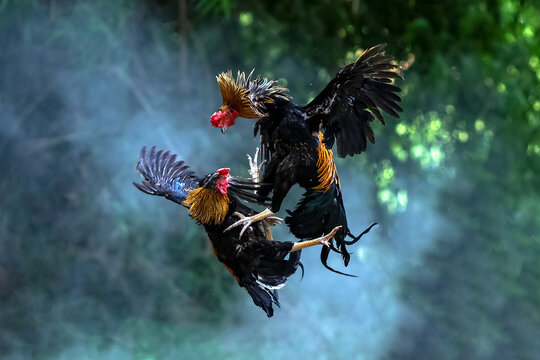
Popular for entertainment or illegal betting, bloodsports is a cruel practice where staged fights are set between animals. All forms of animal fighting are illegal in the United States, with Louisiana being the last to ban it in 2007. While bloodsports are fully banned in the United States, other countries still allow for the continuation of them.
The Philippines and Cockfighting

Cockfighting, known as Sabong in the Philippines, has been a popular pastime for hundreds of years. In the ring, the cocks have a gaff (locally known as tari) tied to the cock’s legs. They’re set to inflict the most damage with minimal movement. Filipinos from all social classes participate in this gambling sport, and it’s been integrated into culture. Due to its popularity, cockfighting became a billion-dollar industry with thousands of arenas and an estimated number of over a million cocks killed. They keep it because they believe it attracts tourism.
In many countries, cockfighting has been banned due to its cruel nature, but the Philippines legalized it.
During 1974, President Ferdinand Marcos signed Presidential Decree No. 449 creating the “Cockfighting Law of 1974.” The law only allows licensed cockpits to run, and all other unregistered cockpits are illegal. As stated in the law, it was passed to preserve Filipino culture.

Any form of bloodsports shouldn’t be legal.
Other sports like boxing don’t need animals to function, so why should animals continue to suffer only to become blood money in the end? There are other ways to express pride for one’s country, and animals shouldn’t become tools for entertainment.
“People fail to recognize the sanctity of animal’s lives simply because of how we allow ourselves to treat them, and if we continue to disregard the immorality of the sport and make a difference, this dehumanization will continue to persist as well, turning more animals into victims for mere entertainment.” (David Agcaoili, Carl Chingkoe, Charles Cuerpo, Jodi Diomampo, Althea Yu)
Sources: Adobe Stock, Ateneo Ethnographies, Supreme Court E-Library