Cardiac Arrhythmia Explained
A cardiac arrhythmia is an irregular heartbeat. While some arrhythmias can be harmless, they can also be life-threatening. An arrhythmia can be the heart beating too fast, or it can be the heart beating too slow. When the heart rate is too slow it’s called Bradycardia.When the heart rate is too fast, it’s called Tachycardia.
Types of Tachycardia
Types of Tachycardia include Atrial fibrillation, Atrial flutter, supraventricular Tachycardia, ventricular fibrillation, and ventricular Tachycardia.
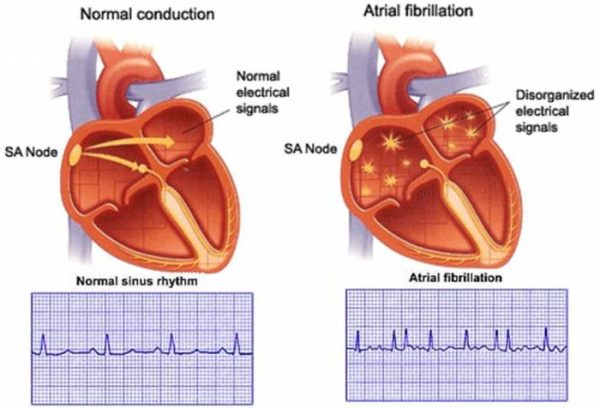
Atrial fibrillation, commonly referred to as “Afib,” is defined as being the most common type of cardiac arrhythmia. It is characterized by a rapid, chaotic, and irregular heartbeat originating in the heart’s upper Chambers (also known as the Atria).
Atrial flutter is defined as a type of supraventricular arrhythmia where the heart’s Atria beat too fast in a rapid, regular, and organized rhythm.
Supraventricular Tachycardia (SVT) is defined as a condition characterized by a rapid, often regular heartbeat (typically 140-220 beats per minute) originating above the heart’s lower Chambers (ventricles).
Ventricular fibrillation (V-fib or VF) is a life threatening, chaotic heart rhythm where the heart’s ventricles quiver instead of pumping, causing immediate cardiac arrest. It is considered the most serious type of arrhythmia, requiring instant CPR and defibrillation (shock) to prevent death within minutes.
Ventricular Tachycardia (VT or V-Tach) is a potentially life-threatening heart rhythm disorder (arrhythmia) where the heart’s ventricles beat too fast, usually over 100 beats per minute, due to electrical issues.
What Does “Too Fast” or “Too Slow” Look Like?
But what does “too fast” or “too slow” actually look like in real life?
For example, a hypothetical sixteen-year-old female who weighs 116 lbs., named Jaylynn is experiencing shortness of breath, heart pounding, and chest pain. Many people will wait to tell anyone about their symptoms because they may think everyone experiences it, they feel like they’re being dramatic if they bring it up, or they may not want to speak up for a fear of being pulled from their activities. These are all things our hypothetical teen Jaylynn thought.
Jaylynn’s Experience and Medical Process
Jaylynn is a very active athlete and one day notices that during one of her activities, she cannot inhale properly. She goes home and tells her parents, so she can seek medical treatment.
The next steps look different depending on the patient, but a Holter heart monitor is common after these concerns are brought up to a doctor. The average heart rate for someone as active as Jaylynn should be 55-65 BPM. Jaylynn will wear the heart monitor for a week, so doctors can see what’s happening. Jaylynn will get blood drawn for labs, wear the heart monitor for a week, and write down her symptoms in a booklet that the heart monitor comes with.
A Realistic Scenario
Hypothetically, Jaylynn takes a trip to Colorado for her sports education trip. The schedule for Jaylynn is very packed and leaves only a little bit of time to eat and sleep. Obviously, eating and sleeping are necessary for everyone, but for someone with an arrhythmia, sleeping and eating are imperative to their health.
On the last night of her trip, she is unable to inhale properly, she quickly goes pale, and cannot stand on her own without support. This is a scary situation for a teenager to be in. One minute, everything is fun, she’s feeling good, and loving the trip. But suddenly, the next minute, everything changes. Unfortunately, this is a common and can be reoccurring situation for someone with an arrhythmia. The next step for Jaylynn is to get to safety, or at least where EMS can reach her.
Factors That Affect Heart Rate
The heart can be affected by anxiety, stress, emotions, medication, body temperature, dehydration, and of course, exercise.
Heart rate is also directly dependent upon age, gender, and body weight.
Diagnosis and Validity
While it is possible to fake an arrhythmia, it is easily confirmed by a doctor. A telling sign that someone actually has an arrhythmia is if they voice their concerns with a doctor and wear a Holter monitor.
Symptoms of Cardiac Arrhythmias
Symptoms of cardiac arrhythmias include:
- a fast heartbeat
- a slow heartbeat
- a fluttering or pounding feeling in the chest
- chest pain
- shortness of breath
- anxiety
- feeling tired
- lightheadedness or dizziness
- sweating
- fainting or almost fainting.
Doctors say that it is important to take cardiac arrhythmias seriously once a person is symptomatic and feeling unwell.